Datum · WIRC 2026
The Tuesday Sheet
This page goes with Ashley Sheaffer’s session at the Women in Residential Construction Conference, “Vibe, Voice & the Single Source of Truth.” Everything shown in the talk is here, ready to copy and paste.
The assignment
Record one meeting this week.
Ask first: “I’m going to record this so I don’t miss anything — is that all right with you both?” Some states, Florida included, require everyone’s consent. Then run Prompt 1 on the transcript that evening.
Meeting recording to Scope of Work
Paste into Claude or any capable AI chat. Replace the bracketed sections with your own.
You are helping me turn a recorded client meeting into a draft Scope of Work for a residential
remodeling project. I will paste the transcript below.

MY STANDARD STRUCTURE (use these sections, in this order — skip any with nothing in them):
[PASTE YOUR COMPANY'S SCOPE SECTIONS HERE. Example:
Demolition / Framing & Structural / Plumbing / Electrical / HVAC / Drywall & Paint /
Tile & Flooring / Cabinetry & Countertops / Fixtures & Hardware / Appliances /
Punch & Cleanup / Exclusions]

RULES — follow all of them:
1. Use ONLY what was actually said in the transcript. Never invent a scope item, a product,
   a dimension, or a price.
2. If the client changed their mind during the meeting, the LATER statement wins. Note the
   change at the bottom under "Superseded during meeting" so nothing is lost silently.
3. Any dollar figure stays a DIRECT QUOTE with the speaker named, marked "(as discussed —
   verify)". Do not total, round, or estimate money.
4. Anything unclear, contradictory, or missing goes in an "OPEN QUESTIONS" list at the end —
   one line each, phrased so I can ask the client directly. Do not guess.
5. Distinguish who said what when it matters: client wishes vs. what our team recommended.
6. Keep the language plain and buildable — write items a tradesperson could act on, not
   marketing copy.

OUTPUT:
- Draft Scope of Work using my sections above
- "Superseded during meeting" list
- "OPEN QUESTIONS" list
- One-line summary of the client's stated budget feeling, quoted exactly

TRANSCRIPT:
[PASTE TRANSCRIPT HERE]
Meetings to production handoff
Your handoff checklist is the source of truth. The transcript answers it.
You are helping me prepare a design-to-production handoff. I will give you two things:
(A) my handoff checklist — the questions production always needs answered before they will
take a project, and (B) one or more meeting transcripts from this project.

MY HANDOFF CHECKLIST:
[PASTE YOUR CHECKLIST HERE — even a rough list works. Example:
- Confirmed finish selections per room (floor, wall, tile, paint)
- Plumbing fixture locations changing? Which ones?
- Any wall moving or opening changing size?
- Electrical: new circuits, relocated switches/outlets, lighting plan approved?
- Appliances: confirmed models? Who supplies?
- Access, protection, and staging notes
- Client communication preferences during construction
- Known allowances still open]

RULES:
1. Go through the checklist question by question. For each one, answer it ONLY if a
   transcript actually answers it — and quote the line(s) you used, with which meeting it
   came from.
2. Mark every answer PENDING — I confirm each one myself. Never present an answer as final.
3. If two meetings conflict, the later meeting wins; show both quotes so I can see the change.
4. Questions no transcript answers go in "STILL OPEN — ask before handoff," sorted by how
   much they'd hurt if discovered during construction (worst first).
5. Do not add checklist questions of your own unless something in the transcript clearly
   needs a decision and my checklist misses it — if so, put it under "SUGGESTED ADDITIONS"
   and say which quote triggered it.

OUTPUT:
- The checklist, answered where possible (each with its quote + meeting)
- STILL OPEN — ask before handoff
- SUGGESTED ADDITIONS (if any)
- A short "what changed since the last meeting" note if multiple transcripts are provided

TRANSCRIPTS:
[PASTE TRANSCRIPT(S) HERE — label each: "Consult 6/12", "Design review 7/02", …]
Approved scope to trade bid packages
The input is the scope a human approved from Prompt 1, never the raw transcript.
You are helping me split an approved residential remodeling Scope of Work into per-trade
bid packages I can send to subcontractors for pricing.

MY TRADES (one package per trade; skip trades with no work):
[LIST YOUR TRADES. Example: Demo & haul-off / Framing / Plumbing / Electrical / HVAC /
Insulation & Drywall / Tile / Paint / Finish carpentry / Countertops]

RULES:
1. Every line in my scope must land in exactly one trade package — if a line belongs to two
   trades (e.g., "move the shower valve in the new wet wall"), put the work with the owning
   trade and add a coordination note to the other ("coordinate with plumber — valve moves
   into this wall").
2. Each package starts with the 3–4 lines of project context that trade actually needs
   (rooms involved, occupied home or not, floor of the house, parking/access) — pulled from
   the scope, not invented.
3. Add an "INCLUDES / EXCLUDES" pair per package so the bid comes back apples-to-apples:
   list what this trade covers and explicitly name the adjacent work they should NOT price.
4. Flag every line where the scope is too vague for a real number ("allowance-grade tile"),
   under "CLARIFY BEFORE BIDDING" in that trade's package. Do not sharpen vague lines
   yourself.
5. No client name, address, or budget figures in any package — job code only.

OUTPUT: one bid package per trade, each self-contained enough to email as-is, plus a
one-page coordination summary listing every cross-trade note in one place.

APPROVED SCOPE OF WORK:
[PASTE THE APPROVED SCOPE HERE]
The concept pair — Dream vs. Budget
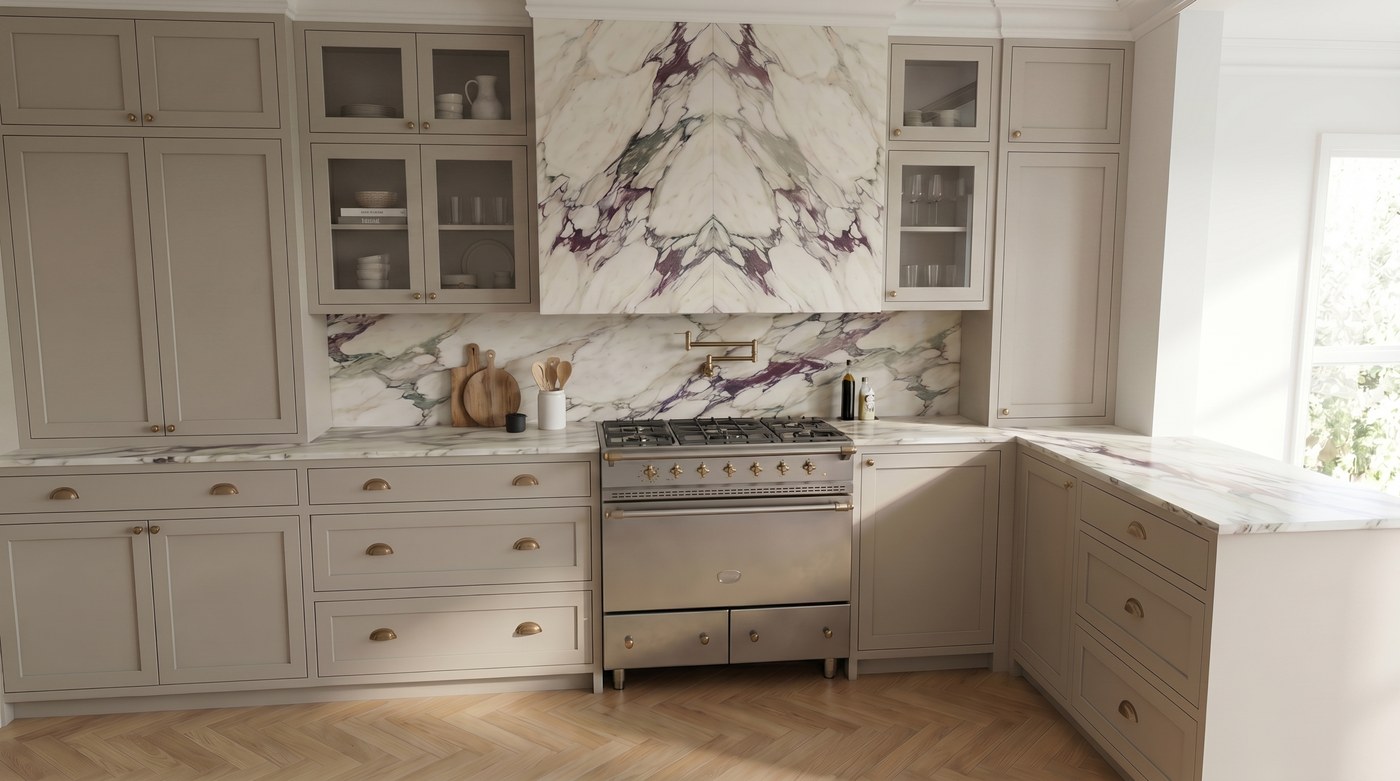
Two images of one real room, so the client picks a lane before anyone designs the wrong project.
1. Capture the real room: a LiDAR scan app (Twindo, Canvas, Polycam,
   magicplan) — or 2–3 level phone photos from a corner.
2. DREAM image prompt: "Using the attached image(s) of this exact room as
   the base: keep the room's layout, openings, window positions, and camera
   angle EXACTLY as shown. Do not move, add, or remove walls, windows, or
   doors. Restyle the finishes only, to this specification: [name real
   products — cabinetry, countertop, backsplash, floor, lighting].
   Photoreal interior photography, natural perspective, no people, no text."
3. BUDGET image: the same prompt with the value-engineered spec — chained
   from the dream image if your tool allows it, so only the finishes differ.
4. Label every image "Concept — not a construction document." Check each
   against the real room before a client sees it. Ballpark ranges come from
   your own price history, never from the AI. The pair is a lane choice,
   not a promise.
The four guardrails
Every skill we run carries the same four protections.
- Self-check. The output shows its work: quotes, sources, open questions.
- Hard caps. Dollar, time, and volume limits the AI cannot exceed.
- Human approval. A person signs off before anything is sent, ordered, or built.
- Receipts. Every claim is traceable to what was actually said or shown.
Stuck? Run Prompt 1. If the output looks wrong, email it to ashley@datumconsulting.ai with a line about what you expected instead. I read and answer every one.